Your Roommate Can't Sign for Your Adderall: The Quiet Rules of Receiving Prescriptions at Home

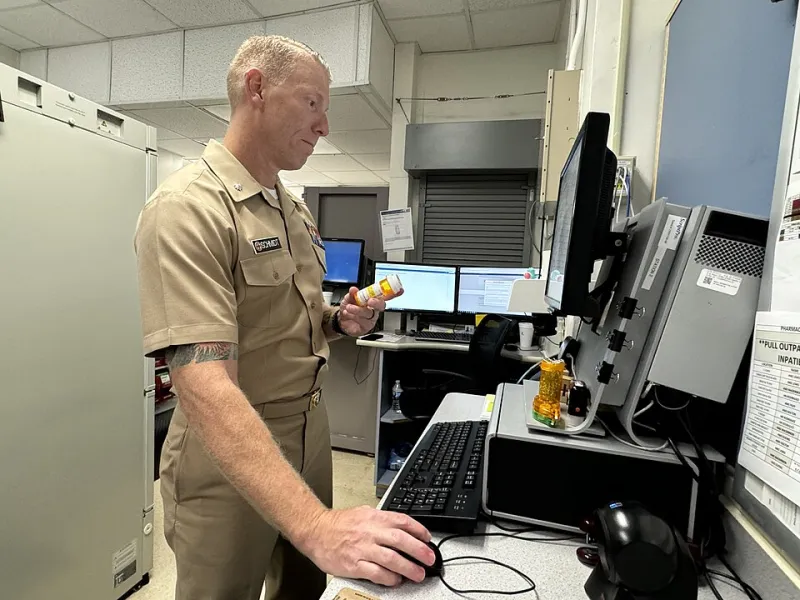
Photo: U.S. Navy photo by Photographer's Mate Airman Benjamin Glass., Public domain, via Wikimedia Commons
You ordered a three-month refill of your medication. Tracking says it's out for delivery. Then a text pops up: "Delivered — signed by: J. SMITH." You don't know a J. Smith. Cue the spiral.
If you've ever wondered who exactly is allowed to sign for your prescriptions — and what happens when the wrong person does — you're asking a smarter question than most. The answer depends heavily on what's in the package, and for certain medications, it matters a lot.
First, the Big Split: Regular Meds vs. Controlled Substances
Most mail-order prescriptions — statins, blood pressure meds, antidepressants — arrive with surprisingly little fanfare. Legally, anyone at your address can accept them. Your roommate, your teenager, your neighbor holding the package while you're at work. There's no federal rule requiring an adult signature for standard prescriptions.
Controlled substances are a different animal. Medications scheduled under the Controlled Substances Act — think ADHD stimulants like Adderall, certain pain medications, and some sleep aids — often require an adult signature at delivery, depending on carrier policy and state law. For these, the person signing generally needs to be an adult at your address or someone you've explicitly authorized.
Here's where people get tripped up: a roommate signing "just to be helpful" without your knowledge isn't automatically committing a crime, but it opens a liability gray zone. If those pills go missing after a proxy signature, tracking down what happened gets complicated fast — for you, not them.
Porch Pirates Love Pharmacy Boxes (Here's Why)
Package theft isn't just an Amazon problem. Prescription deliveries are especially attractive targets because they're predictable, small, and — for controlled substances — potentially resellable. A 2023 survey found that nearly half of Americans have had a package stolen at some point, and medication deliveries are among the most painful losses.
And unlike a stolen pair of headphones, a stolen prescription can't just be reordered for free. Controlled substance refills, in particular, often require pharmacy intervention and sometimes a prescriber's sign-off before an early refill is approved. That's days of going without your medication because someone walked off with a padded envelope.
Your Practical Playbook for Secure Delivery
The good news: mail-order pharmacies and carriers offer more control than most people realize.
Require a direct signature. Many pharmacies let you flag your account so every delivery needs a hand-to-hand handoff. Yes, it's less convenient. It's also the single best theft deterrent.
Use signature-on-file programs. Some carriers let you pre-authorize specific adults — a partner, a trusted neighbor — so deliveries can be released to them without drama.
Get delivery notifications. Carrier apps can ping you the moment a package lands, so it's not sitting on your porch for eight hours.
Consider a lockbox or pickup point. Smart lockers, parcel boxes, or even switching to carrier-held pickup at a local hub eliminates the porch entirely.
Talk to your household. A two-minute conversation — "if a pharmacy box shows up, bring it inside and don't open it" — prevents most proxy-signature confusion before it starts.
What to Do When a Delivery Goes Wrong
If tracking says delivered and nothing's there, act quickly. Contact the pharmacy first — reputable mail-order operations have lost-package protocols and can file a carrier trace. Document everything: tracking numbers, timestamps, photos of your porch. For controlled substances, expect a short investigation rather than an instant reshipment. That's not the pharmacy being difficult; it's compliance working as designed.
If a package was signed by someone you didn't authorize, note that on your claim. Carriers take forged or unauthorized signatures more seriously than they used to, and it strengthens your case.
The Bottom Line
Mail-order pharmacy is genuinely convenient — and for most maintenance medications, remarkably safe. But convenience without a plan is where problems start. Know what you're expecting, decide in advance who's allowed to receive it, and use the delivery controls your pharmacy probably already offers.
Your medication made it through a whole supply chain to reach your door. Make sure the last thirty feet are just as secure as the first three thousand miles.