The $99 Cheek Swab: Can a DNA Kit Really Predict How Your Next Prescription Will Treat You?
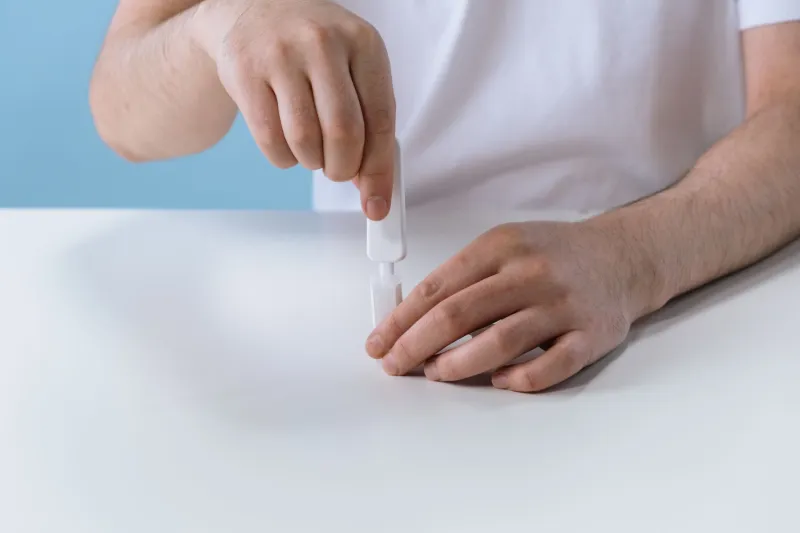
Scroll through any supplement site or telehealth app long enough and you'll run into it: a little box, a cheek swab, and a big promise. Find out how your genes respond to medications — before you take them. For anyone who's ever cycled through three antidepressants before one worked, or watched a parent struggle to get warfarin dosed right, the pitch is genuinely tempting.
Pharmacogenetic testing — PGx, if you want the industry shorthand — is one of the fastest-growing corners of the direct-to-consumer health market. But between the marketing and the reality sits a gap worth understanding before you add a kit to your cart alongside your refill.
What These Kits Actually Measure
When you mail in that saliva sample, the lab isn't reading your entire genome. It's checking a short list of gene variants — usually somewhere between a dozen and 50 spots — that affect how your body processes drugs. The heavy hitters are enzymes in the CYP450 family, the liver's metabolic workhorse.
Think of these enzymes as different speeds of conveyor belt. Some people are "rapid metabolizers" — their conveyor belt runs fast, chewing through a drug before it can do much good. Others are "poor metabolizers," meaning the drug lingers longer and builds up. A handful of these variants are well-documented and, in specific cases, genuinely change prescribing decisions.
The catch? A variant's presence isn't a verdict. It's a data point — one that still needs a clinician to interpret in the context of your kidneys, your other meds, your age, and a dozen things a spit tube can't see.
Where the Science Is Actually Solid
There are a few places where pharmacogenetics has earned real clinical credibility, and it's worth knowing them because they're narrower than the ads suggest.
Blood thinners. Warfarin dosing is the classic case. Variants in the CYP2C9 and VKORC1 genes meaningfully affect how sensitive you are to the drug, and the FDA has acknowledged this on the label. Clopidogrel (Plavix) is another: poor metabolizers may not convert the drug into its active form, which matters enormously after a stent placement.
Some antidepressants. Certain SSRIs — fluoxetine, paroxetine, and others — ride the CYP2D6 conveyor belt. If you're an ultrarapid metabolizer, you might get more side effects and less benefit. The evidence here is real but messier; guidelines from groups like the Clinical Pharmacogenetics Implementation Consortium (CPIC) cover some of it, while other gene-drug pairs remain more suggestion than certainty.
A few others. Certain cancer drugs, some anti-nausea medications given alongside chemotherapy, and the gout drug allopurinol all have well-established gene-drug relationships.
Notice what's missing from that list: most of what Americans actually fill. Metformin, statins, blood pressure meds, antibiotics — for the vast majority of prescriptions, genetic testing tells you very little that changes the decision.
The Direct-to-Consumer Gray Zone
Here's where the online kits get slippery. There's a difference between a PGx test ordered by your doctor, interpreted alongside your chart, and a $99 kit that emails you a color-coded PDF.
Some consumer kits are legitimate: they test the right variants, use CLIA-certified labs, and encourage you to share results with your physician. Others oversell — implying the test will predict which antidepressant will work for you, when the science simply can't deliver that yet. A 2023 review in the literature on commercial pharmacogenetic panels has repeatedly flagged this gap between marketing and evidence.
And there's a regulatory wrinkle: the FDA has cleared some genetic tests but has also sent warning letters to companies overstating what their results mean. The FDA regulates the test; it doesn't certify the interpretation your doctor applies to it.
What a Swab Can't Do
Even a perfectly accurate genetic result can't replace the messy, human process of prescribing. Your genes don't capture:
- Drug interactions. Two medications can fight over the same enzyme regardless of your DNA.
- Kidney and liver function. Genetics might say you're a normal metabolizer; cirrhosis says otherwise.
- Adherence. The most common reason a drug "doesn't work" is that it isn't being taken consistently — no gene explains that.
- Everything else. Age, weight, diet, alcohol, sleep, stress. The list is long.
A doctor who starts an SSRI at a low dose and titrates up over six weeks is doing something a DNA report can't shortcut: observing how you, the whole person, respond.
So Should You Buy the Kit?
A reasonable framework for the curious shopper:
It's probably worth considering if you're starting a medication with a known gene-drug pair (warfarin, clopidogrel, certain SSRIs), you've had unusual or dangerous reactions to meds before, or you have a family history of adverse drug reactions. In those cases, a legitimate PGx panel — ideally ordered through your physician so insurance might cover it — can genuinely inform care.
It's probably not worth $99 if you're a generally healthy person buying a standard refill and hoping the report will optimize your shopping. That's expensive reassurance, not medicine.
Either way, treat the results as a conversation starter with your pharmacist or doctor — not a prescription written by an algorithm. Bring the report to your next appointment and ask what, if anything, it changes.
The Bottom Line
Pharmacogenetics is real science with real, growing clinical value — and a marketing layer that often runs ahead of it. The best use of a consumer kit is as a complement to your care team, never a substitute for one. If a swab result ever tells you to start, stop, or change a medication on its own, that's your sign the company selling it is more interested in your cart than your health.
Your DNA is a useful chapter of your medical story. It's just not the whole book — and it's definitely not a prescription.