Ask for the Cash Price: The Forgotten Question That Could Save You Hundreds at the Pharmacy
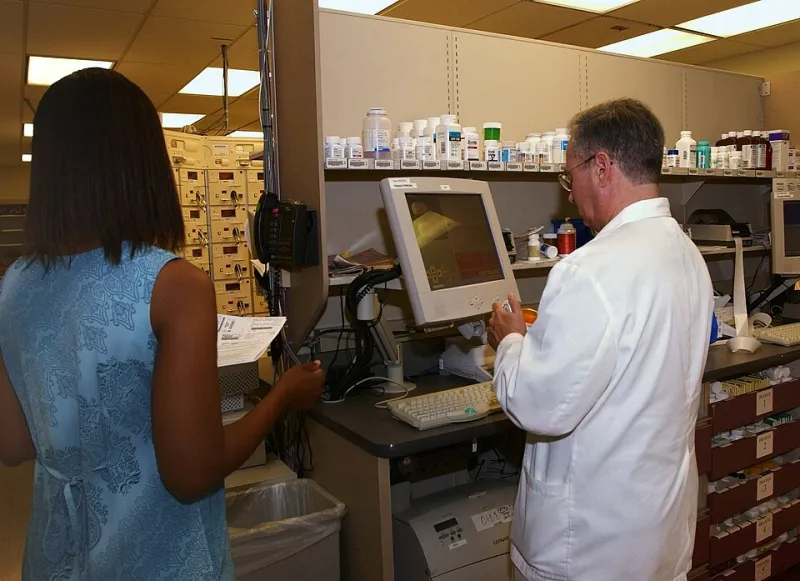
Photo: U.S. Navy photo by Chief Warrant Officer 4 Seth Rossman., Public domain, via Wikimedia Commons
There's a moment that plays out at pharmacy counters across America every single day. A patient hands over their insurance card, pays their copay, and walks out without realizing the medication they just bought was actually available for less — sometimes a lot less — if they'd simply paid cash.
It sounds backwards. Insurance is supposed to be the discount, right? Not always. And thanks to a quiet resurgence in pharmacy generic discount programs, the gap between what insured patients pay and what cash-paying patients pay has never been more worth checking.
The Strange Math of Copays
Here's the counterintuitive part: your copay is a fixed number negotiated between your insurer and your pharmacy benefit manager. If a generic medication costs $8 at the cash rate and your plan's copay is $15, you're overpaying by $7 — and depending on how your plan is structured, that $7 may not even count toward your deductible.
Pharmacists have known about this quirk for years. Many will run both prices if you ask, but they can't always volunteer the comparison. Some insurance agreements actually discourage pharmacies from advertising the cash price. That means the savings are sitting there, waiting for patients who know to ask.
What Exactly Is a $4 List?
Back in the mid-2000s, big-box pharmacies began publishing lists of generic medications available for a flat $4 for a 30-day supply — often $10 for 90 days. The lists became legendary among frugal patients, covering workhorse generics like lisinopril for blood pressure, metformin for diabetes, atorvastatin for cholesterol, and sertraline for depression and anxiety.
The programs never went away, but they faded from conversation as insurance plans and copay apps took over. Now they're having a moment again. With high-deductible health plans becoming the norm — more than half of employer-sponsored plans now involve deductibles north of $1,500 — plenty of Americans are effectively paying full price anyway until they hit that threshold. Against that backdrop, a flat $4 or $10 looks pretty great.
The Cash-Pay App Effect
Alongside the classic $4 lists, a wave of cash-pay pricing platforms has reshaped the landscape. These aren't insurance — they're negotiated discount networks that let anyone look up a drug, compare prices across nearby pharmacies, and pay the advertised rate at the counter. No enrollment paperwork, no deductibles, no prior authorizations.
For common generics, these rates are often dramatically lower than insured prices. And because they're transparent up front, they've introduced something rare in American healthcare: the ability to comparison shop before you commit.
How to Actually Compare Prices
Want to find out whether you're leaving money on the table? Here's a straightforward routine:
- Know your drug and dose. Have the exact generic name, strength, and quantity handy.
- Check the discount lists and apps first. Search your medication on a cash-price platform and at any big-box pharmacy discount list before you even leave the house.
- Ask the pharmacist directly. Say something like: "Can you run the cash price and my insurance price and tell me which is lower?" This is a completely normal request, and pharmacists are generally happy to do it.
- Do the math annually, not just once. If you take a maintenance medication, that monthly difference compounds. Saving $10 a month is $120 a year on one prescription alone.
One important note: cash purchases generally don't count toward your deductible or out-of-pocket maximum. If you're close to meeting your deductible or taking an expensive specialty drug, insurance pricing may still win overall. The comparison is worth doing either way.
Which Medications Show Up on These Lists?
The sweet spot for discount programs is older, widely used generics — the medications that treat the most common chronic conditions in the country. Typical categories include:
- Blood pressure meds: lisinopril, amlodipine, losartan
- Diabetes staples: metformin, glipizide
- Cholesterol drugs: atorvastatin, simvastatin
- Mental health basics: sertraline, fluoxetine, bupropion
- Antibiotics: amoxicillin, azithromycin
- Thyroid medication: levothyroxine
What you won't usually find: brand-name drugs, newer medications still under patent, and specialty biologics. Those live in a different pricing universe entirely.
A Few Practical Caveats
Before you ditch your insurance card at the pharmacy, keep a few things in mind. Prices vary by location, so the cheapest pharmacy in town for one drug might not be cheapest for another. Discount programs can change or restrict their lists without much fanfare. And always, always talk with your pharmacist or doctor before switching where or how you fill a prescription — especially if you take multiple medications and want them synchronized for refills.
Also worth remembering: skipping insurance for cheap generics can sometimes be the savvier long-term play. Lower cash spending means less drain on your deductible budget, which can matter when a bigger medical expense shows up later in the year.
The Bottom Line
American healthcare pricing is opaque by design, but generic discount programs are one of the few places where the curtain has been pulled back. The information is public, the savings are real, and the whole process takes about two minutes of asking.
So the next time you're at the counter, try the question almost nobody asks: "What's the cash price?" Worst case, you hear a number and pay your copay as planned. Best case, you join the growing ranks of patients who discovered that sometimes the best health insurance deal in America is no insurance at all — just four dollars and a pharmacist who's glad you asked.